Agricultural land doesn't make life easy for connected devices. Ranches can run to tens of thousands of hectares. Plantations climb hillsides and disappear into canopy. Apiaries sit in far corners where no one wants to run a cable. Power and mobile coverage are rarely available exactly where you need a measurement.
LoRaWAN was designed for this kind of problem. It's a low-power radio network that lets small, generally affordable sensors send short messages over many kilometres, often running for years on one battery. A single gateway on a farm building or hilltop can cover a surprising amount of ground, and the sensors don't need a SIM card or a mains connection.
It's also an open standard, so you aren't locked into a single vendor. A fence monitor, a soil probe and a livestock tag from three different manufacturers can all report to the same network and show up on the same dashboard.
This note collects the LoRaWAN sensors we've come across in agriculture, as a starting point if you're planning your own setup. It's a snapshot, not a complete survey, and we'll revise it as the market moves. We have no commercial relationship with the vendors mentioned, except that the Fence Shield is our own product. (We've also put together a similar guide for protected areas, where some of the same hardware shows up.)
We've grouped the sensors into four areas:
- Farm Infrastructure & Assets
- Crop & Environment
- Livestock
- Water & Irrigation
Each sensor type has a rough price band per unit:
$ - under 100 USD
$$ - 100-300 USD
$$$ - above 300 USD
Treat these as ballpark figures. Real prices depend on region, supplier and order size.
1. Farm Infrastructure & Assets
Fences, fuel, pumps and equipment are what keep a farm running, and also what's most costly to lose or damage undetected. Problems here tend to be silent until it's too late: a broken fence wire nobody has noticed, a generator that has gone missing overnight, a fuel tank draining without explanation. These sensors turn those silent failures into alerts.
Electric Fence Monitoring
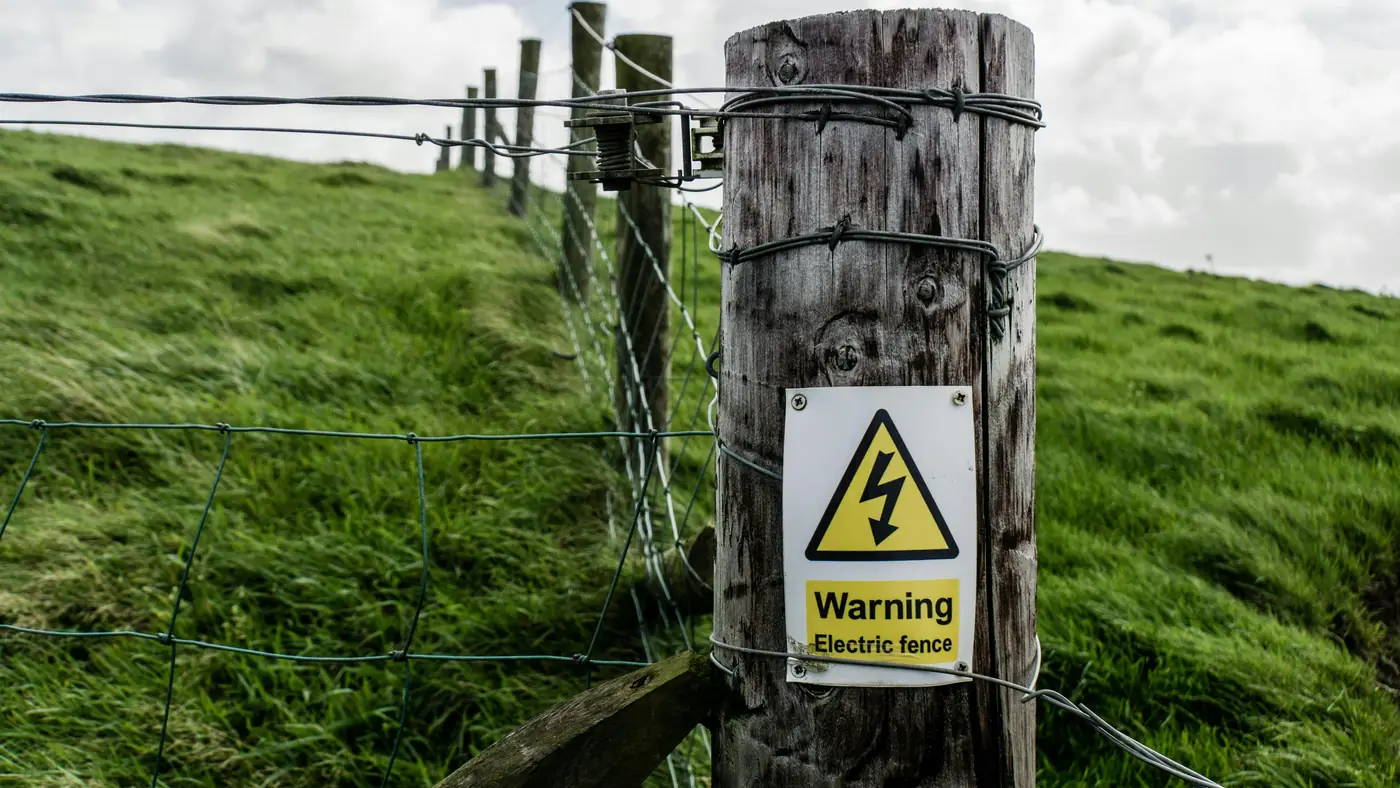
Electric fencing is one of the most versatile tools in agriculture. It keeps livestock in their paddocks, but it's equally important wherever wild animals threaten crops, orchards, vineyards or apiaries. What the fence is protecting changes depending on where you farm; the failure modes don't. A fallen branch, a flat energizer, a broken wire or a failed earth can all let the fence down, and the usual way to find out is an animal on the wrong side.
Electric fence monitoring changes that. A sensor reads the high-voltage pulse on the wire and reports it over LoRaWAN, so a drop in voltage becomes a notification and you know which stretch to check. This is the area we know best. The LoRaWAN version of our Safora Fence Shield is built for it. If you want to understand what the readings mean, our guide to reading fence voltage data walks through typical patterns.
Cost: $$
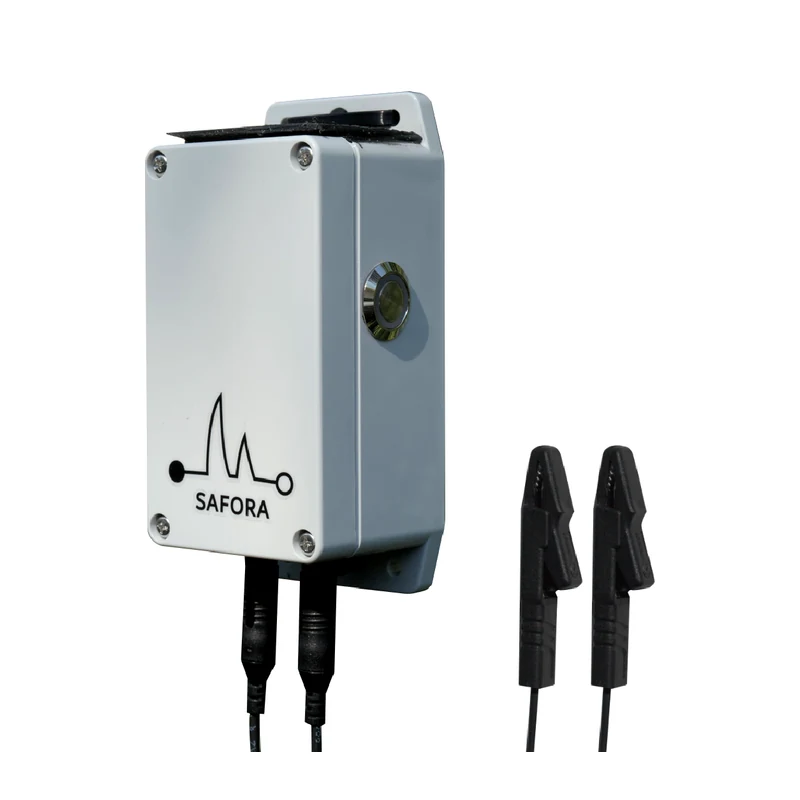
The Safora Fence Shield, built for electric fence monitoring.
Gate & Door Sensors
Magnetic contact sensors on farm gates, equipment bays and grain store doors log every open and close event, and send an alert if something is left open or opened at an unexpected time. They're one of the simplest and cheapest sensors on this list, and useful wherever access matters: a paddock gate that shouldn't be left open overnight, or a fuel store and equipment shed where you want a record of when the door was opened. The Dragino DS03A-LB is a straightforward LoRaWAN option.
Cost: $
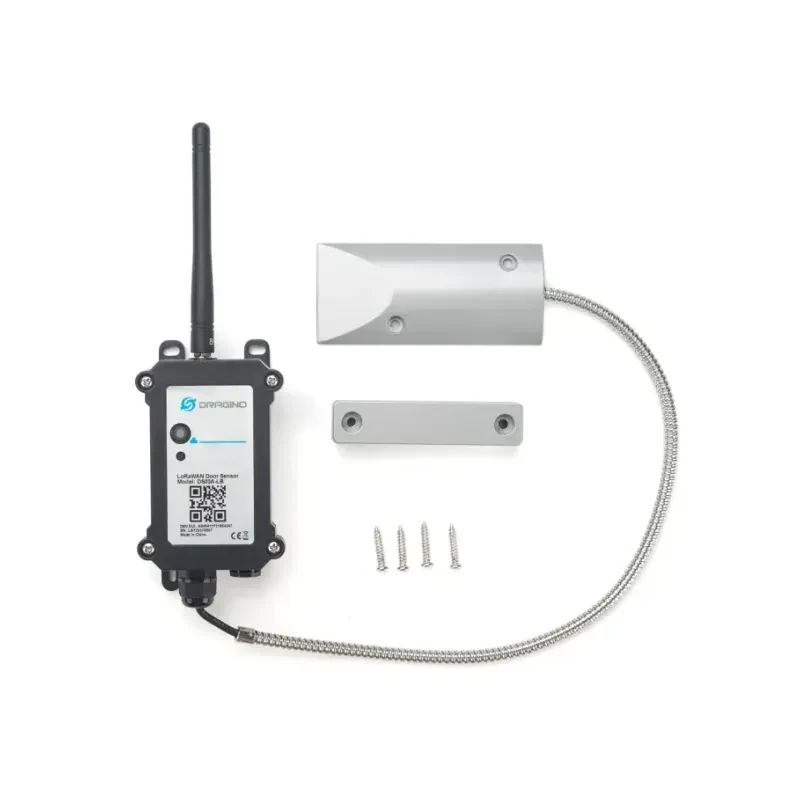
Dragino DS03A-LB open/close sensor with armored cable and magnetic contact.
Anti-Theft & Equipment Tracking
Pumps, generators, fuel tanks, quad bikes and even beehives are easy to take from a remote property, and nobody is around to notice. A GPS tracker hidden on the item will tell you where it is and flag it if it moves when it shouldn't. For beekeepers, a tracker tucked inside a hive body is one of the few practical defences against hive theft. The Digital Matter Oyster3 LoRaWAN, the solar-powered Dragino TrackerD-LS and the SenseCAP T2000 all fit this role. The T2000 comes in battery and solar versions and raises a tamper alarm if it's removed from whatever it's mounted on. All three are equally useful for everyday questions like which paddock a trailer got left in.
Cost: $–$$

SenseCAP T2000, a LoRaWAN asset tracker with a tamper alarm.
Remote Switching & Relays
Some equipment is worth controlling, not just watching. A LoRaWAN relay switches mains-powered equipment on and off remotely: starting or stopping a generator or pump, turning on lights and fans in a shed, or power-cycling a fence energizer that has tripped. Each saves a drive out to a far corner of the property. The Dragino LC01 is one example. It's a mains-powered AC relay, so it needs wired power where it's installed.
Cost: $–$$
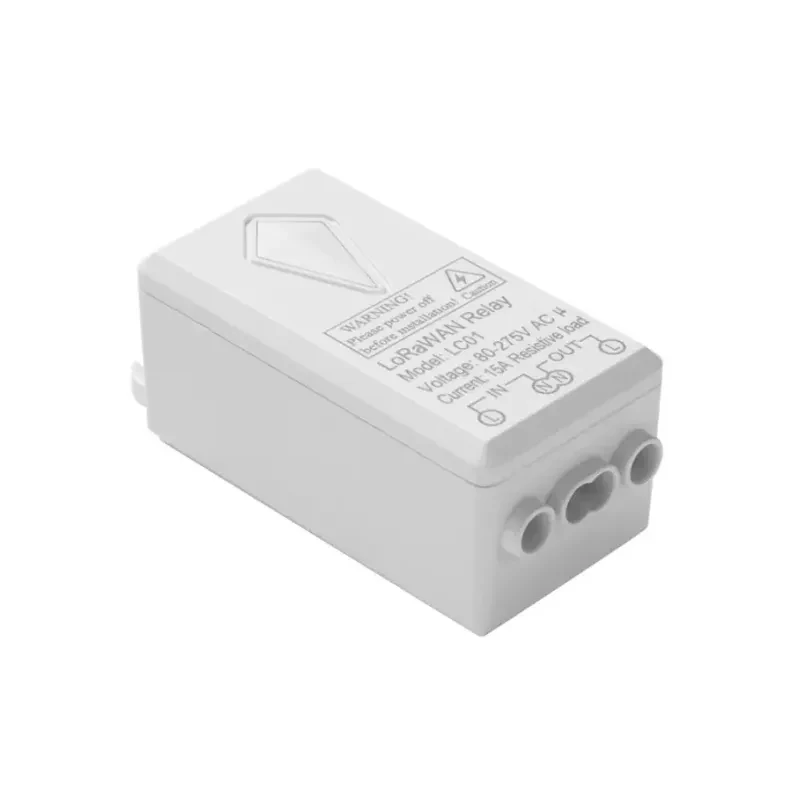
Dragino LC01 LoRaWAN relay for remote AC switching.
2. Crop & Environment
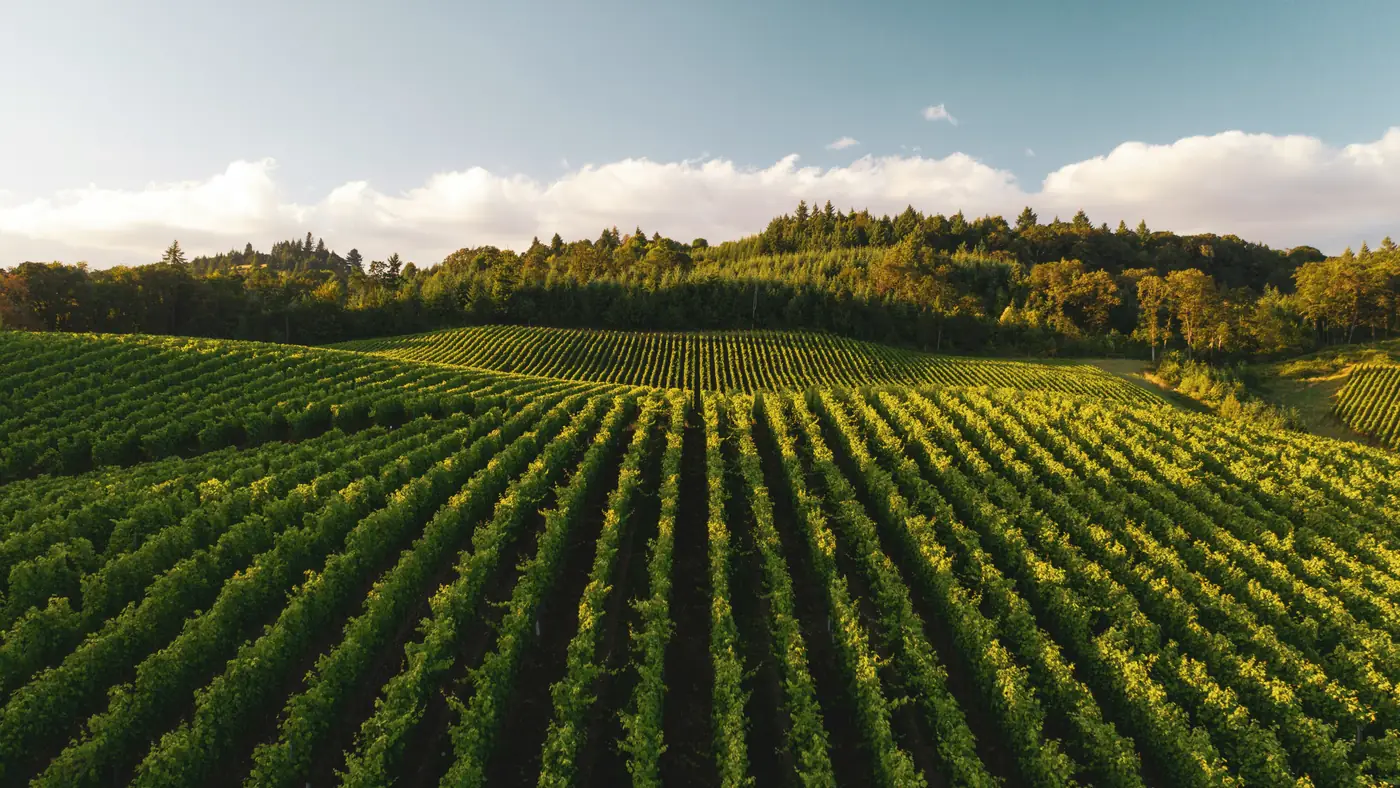
Most calls in the field, such as when to irrigate, when to spray and when to protect against frost, depend on conditions that vary from one block to the next. These sensors let you measure them where your crop actually grows, whether that's arable fields, orchards or plantations of coffee, bananas or oil palm, rather than relying on a regional forecast.
Soil Moisture, Temperature & EC
FDR probes measure how much water is in the soil, along with temperature and electrical conductivity (EC), at the point where they're buried. They're the starting point for precision irrigation: irrigate when the soil says so, not just because it's Tuesday. EC adds a rough read on salt or fertiliser levels. The Dragino LSE01 and the SenseCAP S2105 are popular choices, the latter with up to 10 years of battery life and phone-based setup, and the Decentlab DL-TRS12 is a higher-end alternative. If you need readings at several depths rather than a single point, for example to see how far an irrigation cycle has penetrated or whether water is draining past the roots, the Decentlab DL-SMTP offers a multi-depth probe.
Cost: $$–$$$
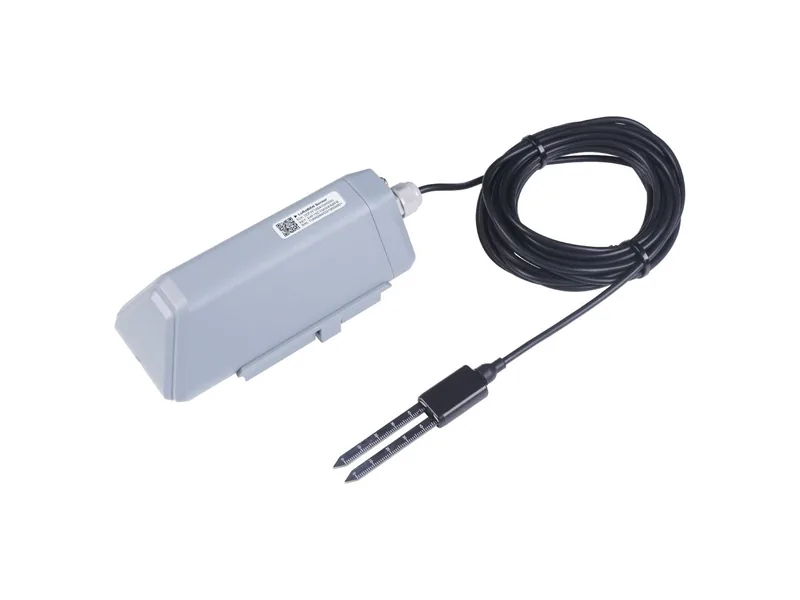
SenseCAP S2105 soil moisture, temperature and EC sensor.
Leaf Wetness & Disease Risk
Fungal diseases need leaves to stay wet for long enough to take hold, which makes leaf wetness duration a key input to disease-risk models. A sensor clipped into the canopy logs how long leaves stay wet after dew, rain or overhead irrigation. The Dragino LMS01-LB is a simple LoRaWAN example, and the Decentlab DL-LWS is a higher-end alternative that can also detect ice forming on leaves, which ties in with frost alerts below. With either, you can time protective sprays against actual risk instead of a fixed calendar.
Cost: $$–$$$
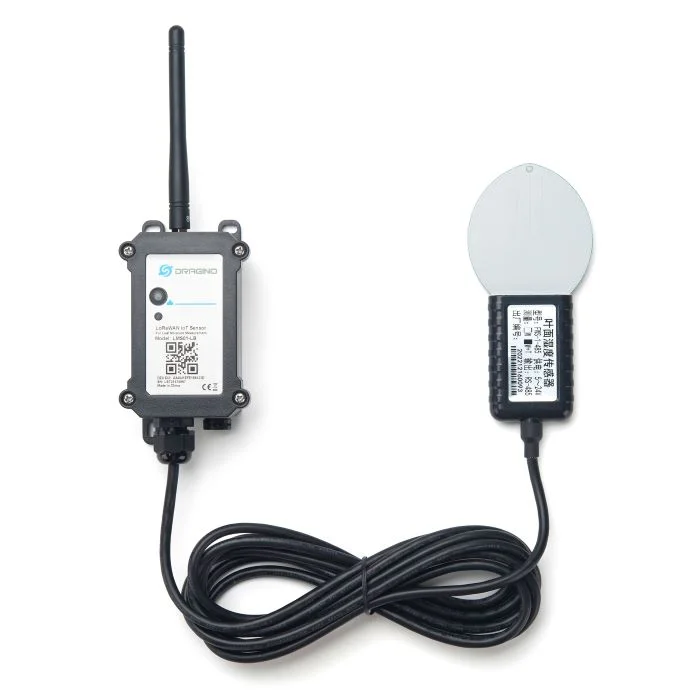
Dragino LMS01-LB LoRaWAN leaf wetness sensor.
Local Weather & Frost Alerts
A weather station on your own land captures what regional forecasts miss. Frost is the clearest case, since temperatures can differ by several degrees between a valley bottom and the slope above it. An 8-in-1 station reports air temperature, humidity, rainfall, wind, light and pressure together. The SenseCAP S2120 is a budget-friendly choice and the Decentlab DL-ATM41G2 is a higher-end alternative. Set a temperature threshold and you'll get a warning in time to run frost protection.
Cost: $$–$$$
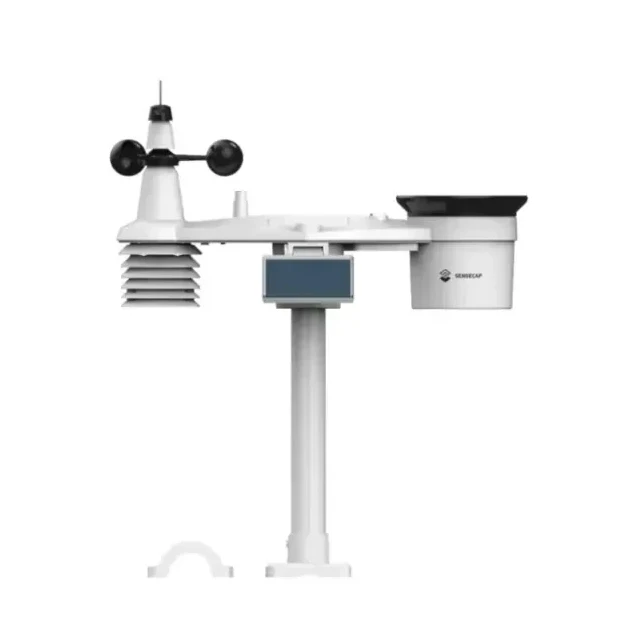
SenseCAP S2120 all-in-one LoRaWAN weather station.
3. Livestock
Checking on animals is a big part of the daily workload on any livestock operation, and on ranches it can mean hours of driving. Sensors on the animals and in their housing cut that down, and surface problems earlier.
Location, Geofencing & Activity
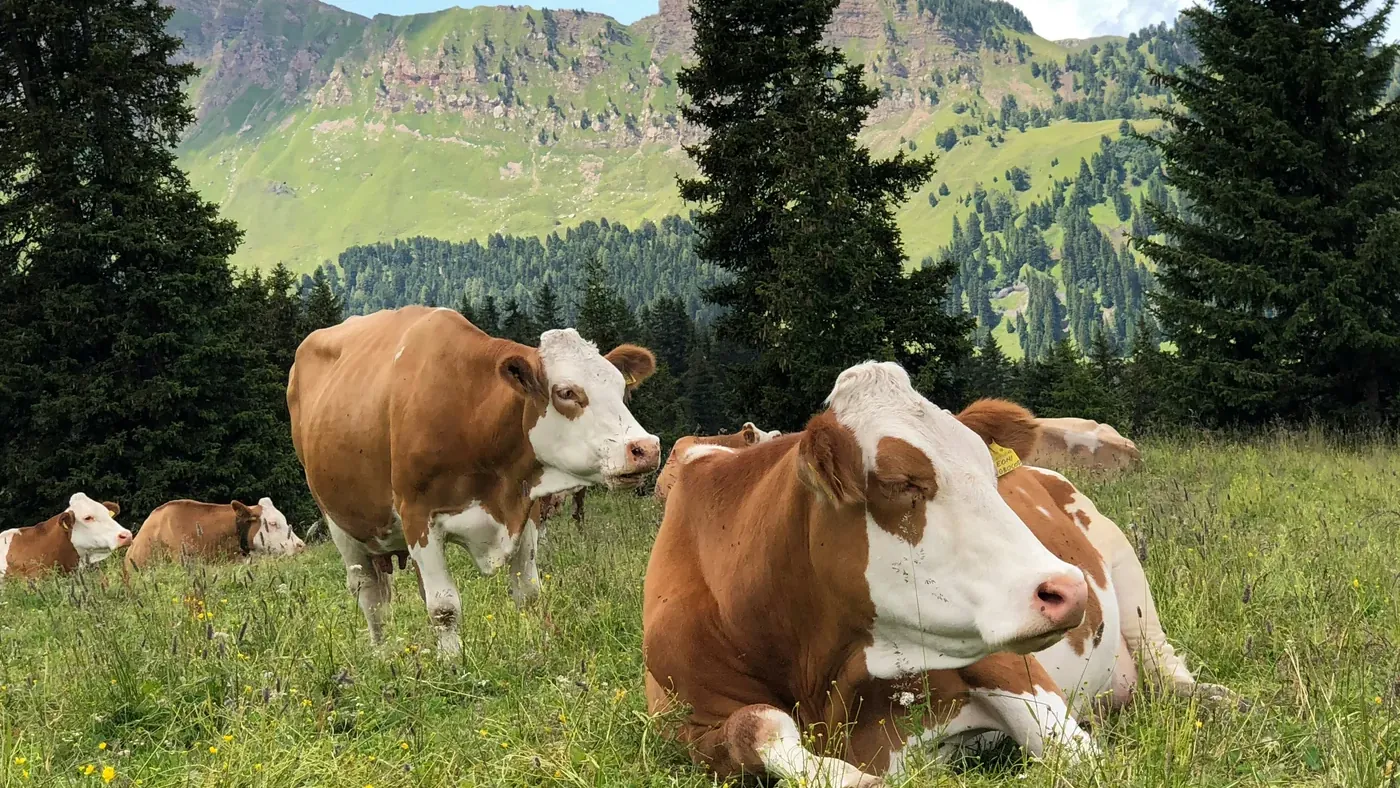
GPS tags and collars do two jobs. Location shows where the herd is across large or rough paddocks, and a geofence alerts you if animals cross a boundary. Some also carry accelerometers, and unusual movement, such as an animal that has stopped moving, can point to illness or injury.
Many livestock tracking systems are sold as a complete package of tags, gateways and app, and won't join a network you already run. mOOvement's GPS ear tags are a good example: the solar-powered tags last up to five years, report every hour, and alert you when an animal leaves its paddock or stops moving, but they run on mOOvement's own LoRaWAN network and app. If you'd rather use your own network, two tags that use standard LoRaWAN cover the two usual power choices. Lansitec's solar-powered ear tag is light and tops up its own battery. Digital Matter's Yabby3 in its livestock collar housing has user-replaceable batteries, sits on a strap, and suits cattle, sheep and goats. Both can be registered on your own network server.
Cost: $$
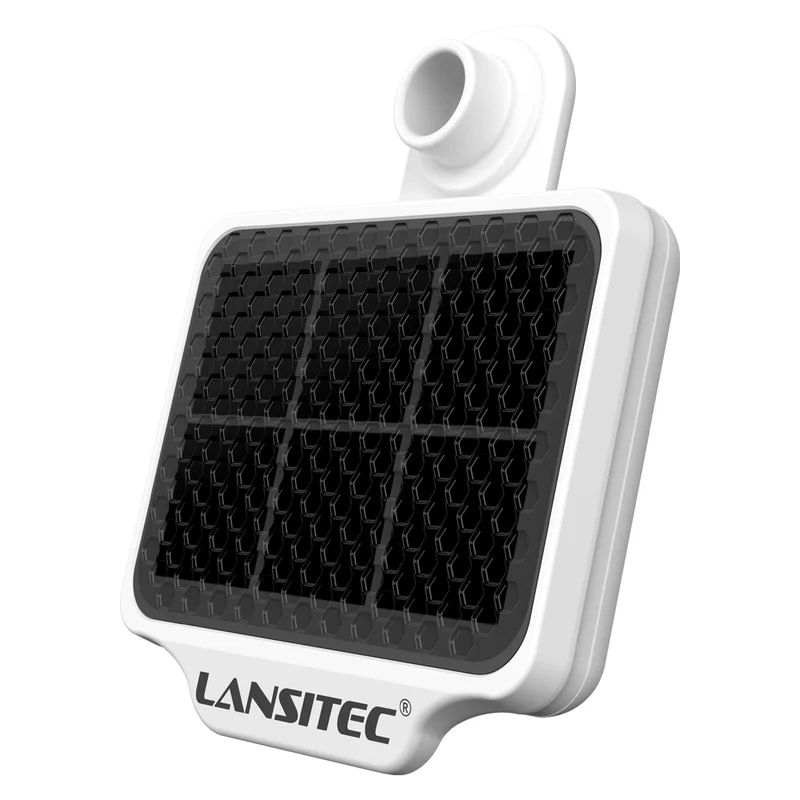
Lansitec livestock tracking tag, a solar-powered LoRaWAN ear tag.
Barn & Shed Climate
Heat, damp and stale air quietly hurt animal health and growth in barns, poultry houses and calf sheds. A combined temperature, humidity and CO2 sensor like the SenseCAP S2103 shows when ventilation isn't keeping up and alerts you when conditions drift out of range.
Cost: $$
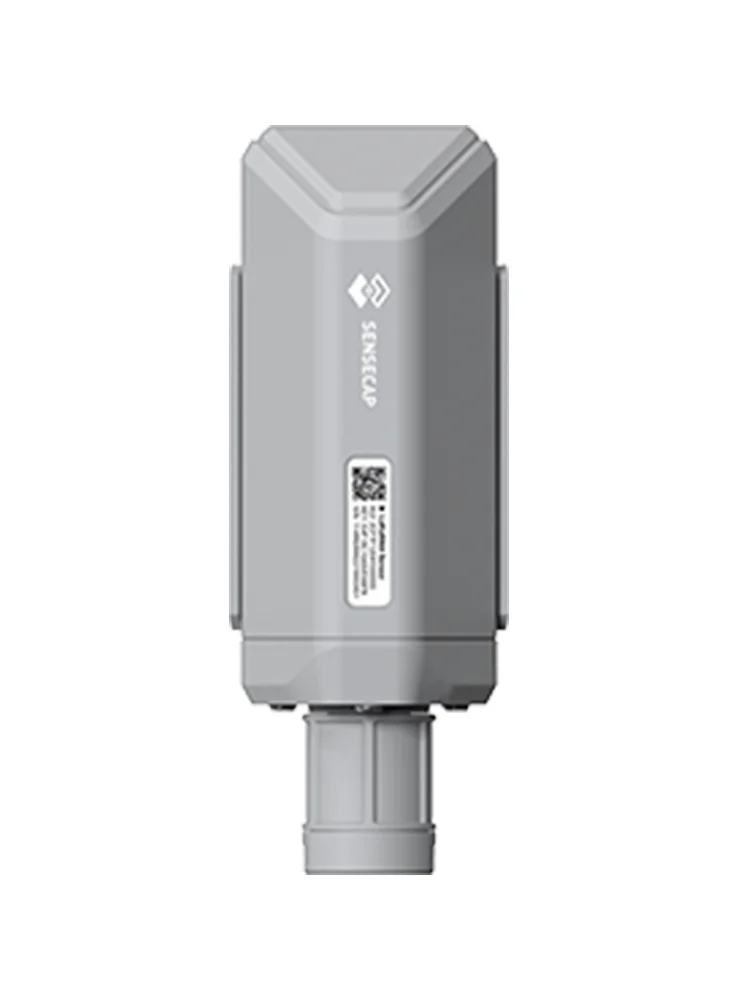
SenseCAP S2103 CO2, temperature and humidity sensor.
4. Water & Irrigation
Running out of water is one of the fastest ways to lose animals or a crop, and also one of the hardest to notice from a distance. A leaking pipe or an empty trough can go unseen for days. These devices keep watch on water as it's stored, moved and applied.
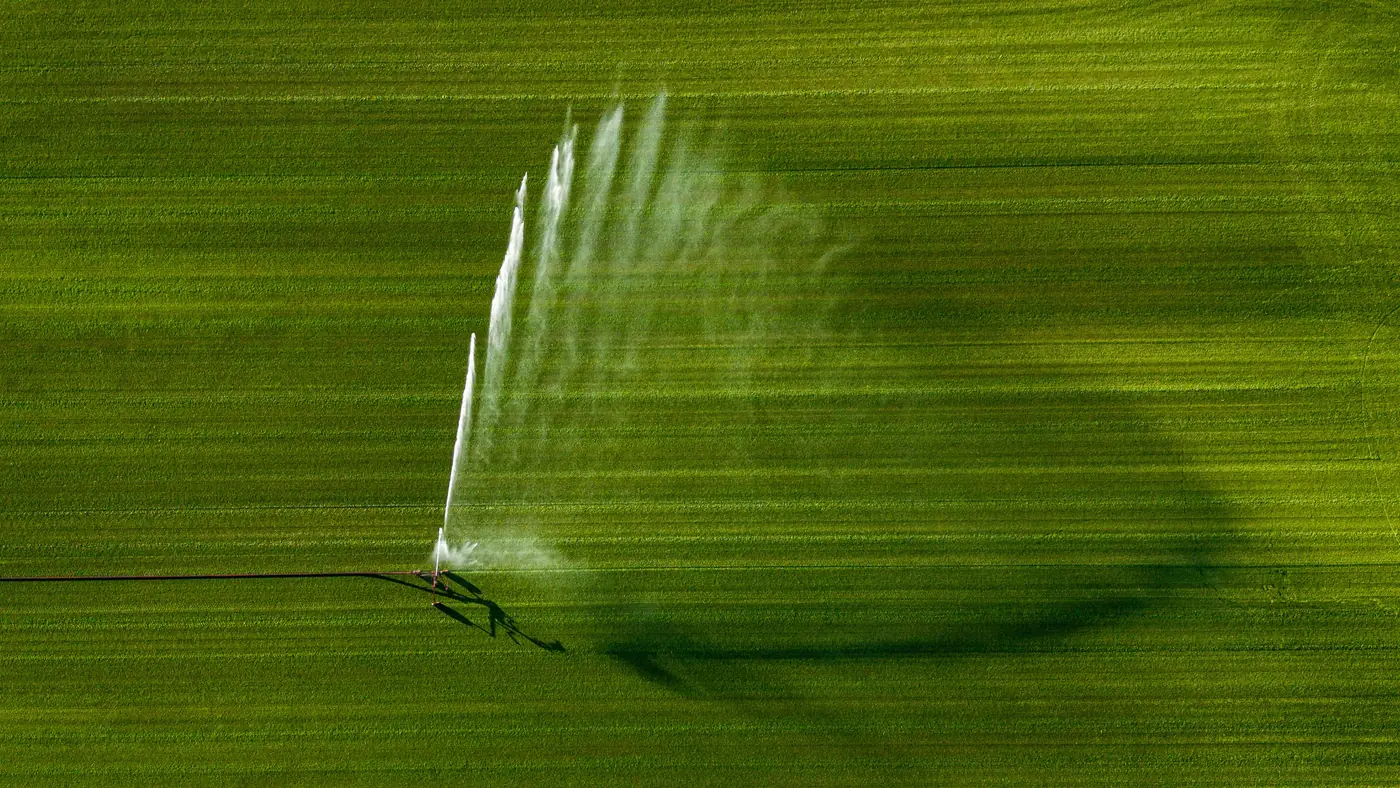
Tank, Trough & Reservoir Levels
Level sensors report how much water sits in a tank, trough or dam, so you can stop making drive-by checks and get an alert when a level falls too low. Ultrasonic sensors hang above the water and measure from the surface down; the Dragino LDDS75 is a straightforward option for most tanks and troughs. For wells or groundwater where depth matters more, the Decentlab DL-PR26 is a submersible pressure sensor built for the job.
Cost: $–$$$
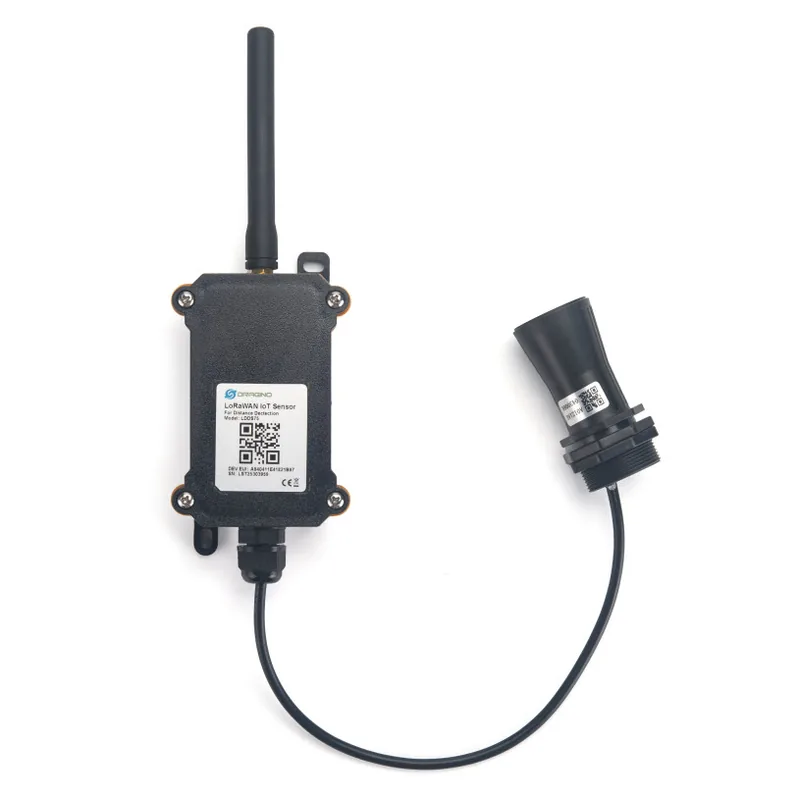
Dragino LDDS75 ultrasonic distance sensor, used for tank and trough levels.
Irrigation Line Health
Pressure in an irrigation line tells you whether the system is working as intended. A sudden drop may mean a burst or leak, while abnormal pressure at the end of a line can point to a blockage or a failing pump. The Milesight EM500-PP fits on the pipe, so a few well-placed units can watch a large system without anyone walking the lines. The Dragino PS-LB platform supports several probe types; for irrigation lines, choose the threaded pipe-mount type and check that its pressure range and thread size match your pipe fitting.
Cost: $$
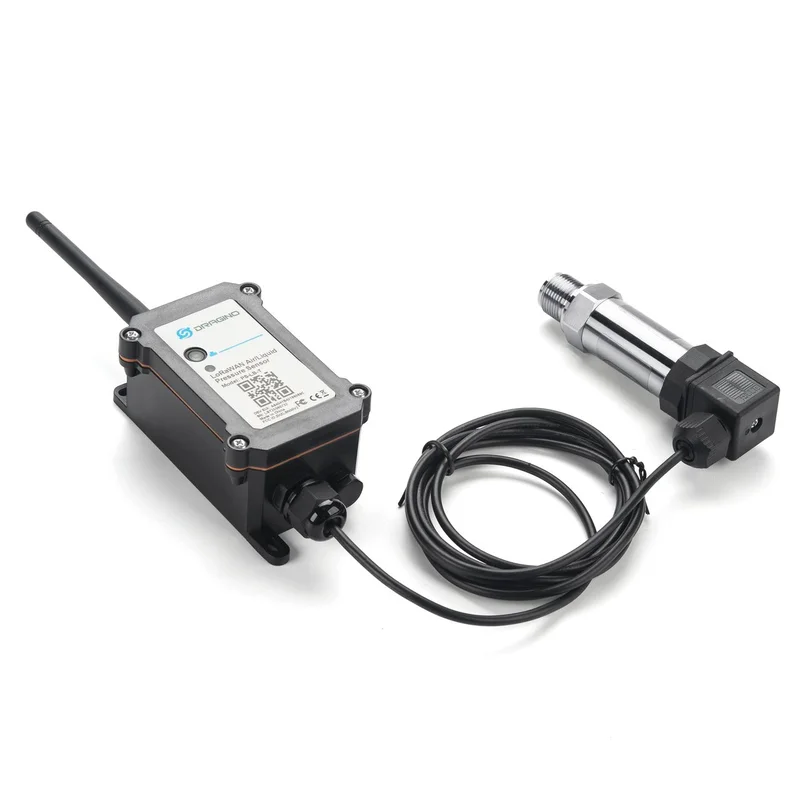
Dragino PS-LB-T20 with threaded pipe-mount pressure probe.
Flow Metering
Pressure tells you the system is working; flow tells you how much water actually moved. That's the most direct way to spot a slow leak, catch irrigation that ran longer than intended, or allocate water use across blocks and seasons.
Small lines such as troughs and building supplies: the Dragino SW3L fits into the pipe and measures flow itself, with no separate meter. It covers 0.5 to 30 L/min.
Larger irrigation lines: use a standard water meter with a pulse output, wired to a LoRaWAN pulse counter such as the Dragino CPL03-LB. The meter does the measuring, and the counter sends the total over LoRaWAN. Check that the meter you choose has a pulse output, as many don't.
Cost: $–$$
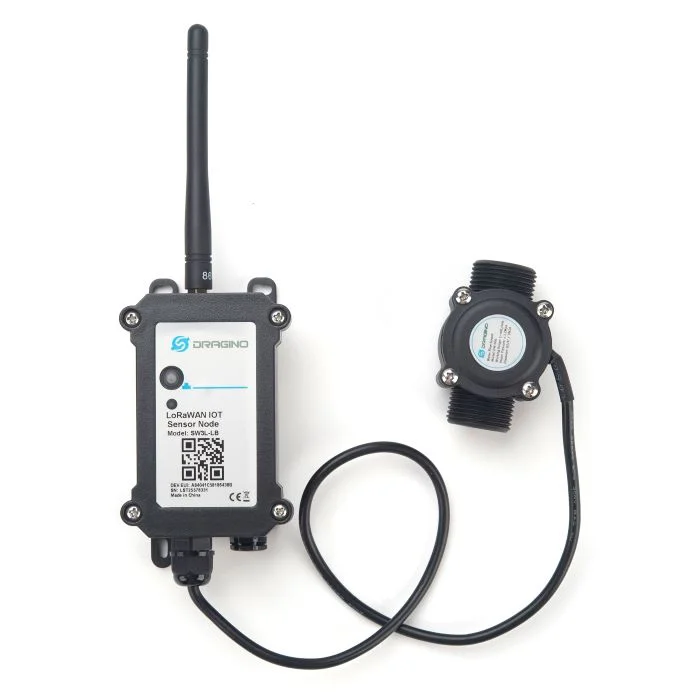
Dragino SW3L-LB LoRaWAN flow sensor.
Irrigation Valve Control
With moisture, pressure and flow data in hand, the next step is acting on it. Latching solenoid valve controllers open and close irrigation valves remotely or on a schedule, and they only use power when they switch, which suits solar and battery setups. The Milesight UC512 and Dragino SVC01-LS2 are used this way. The UC512 also has pulse inputs, so a water meter can connect to the same device, giving you flow readings and valve control in one unit.
Cost: $$
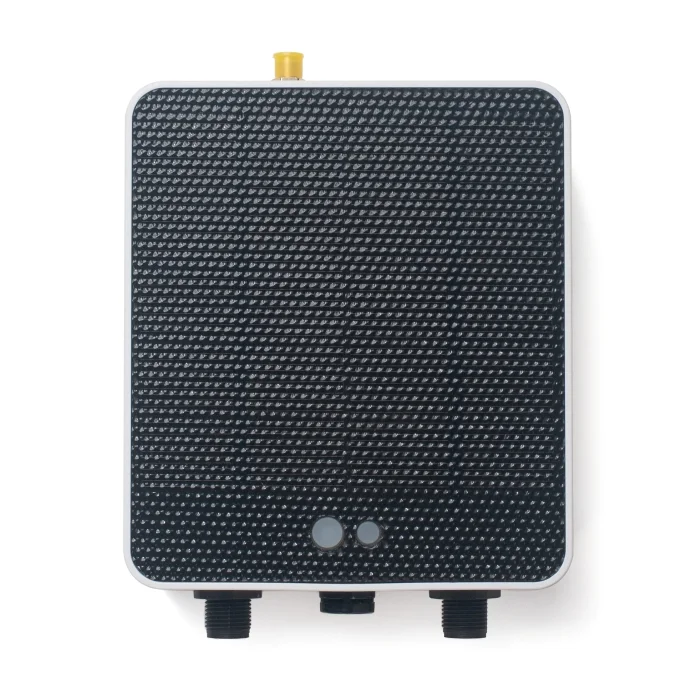
Dragino SVC01-LS2 solar-powered solenoid valve controller.
Final thoughts
LoRaWAN covers a lot of ground in agriculture, and what's above is only part of the picture. For more devices, the LoRaWAN device repository is a good place to browse.
If you're deciding where to start, choose the one or two problems that cost you the most, whether that's fence faults, wasted water or livestock going missing, and solve those before expanding. The real value tends to show up once sensors are working side by side. A pressure drop and unexpected flow on the same line overnight point to a leak more clearly than either signal alone. Because everything speaks the same protocol, all of it can end up in a single view.
Missing a sensor or use case you've seen work? Or have thoughts on something we've listed? Write to us at info@safora-tech.com.